
Have you ever noticed a family member feeling tired more often than usual, sipping water every few minutes, or waking up at night to use the washroom repeatedly? These small changes can sometimes point to something bigger, something we call diabetes.
In India, diabetes has become one of the most common long-term health conditions. In fact, our country is often called the 'diabetes capital of the world', with more than 10 crore Indians living with the condition and another 13 crore with prediabetes. If you or someone at home has been told about high sugar levels, you probably have many questions. This guide by UniClinic will walk you through what diabetes really means, why it happens, how to spot it early, and what you can do to live well with it.
In simple words, diabetes is a condition where your blood sugar (glucose) stays higher than it should. Your body uses a hormone called insulin, made by the pancreas, to move sugar from your blood into your cells for energy. In a diabetic patient, either the body does not make enough insulin, or the cells stop responding to it properly. So sugar keeps floating in the blood instead of being fed to your body.
According to the World Health Organisation, around 422 million people worldwide are living with diabetes, and the numbers keep climbing. The ICMR-INDIAB study found that over 10 crore Indian adults have diabetes. Another 13 crore have prediabetes, a stage that can still be reversed with simple changes. That's a huge chunk of our country, which is exactly why understanding diabetes matters for every family.
Not all diabetes is the same. Doctors usually talk about four types, and each behaves differently. Knowing the type helps your doctor plan the right treatment.
This is an autoimmune condition where your body's own defence system attacks the insulin-making cells in the pancreas. It usually starts in childhood or the teenage years. Children with Type 1 diabetes need insulin injections for life. It is not caused by eating too much sugar or sweets, which is a very common myth in Indian households.
This is by far the most common form, especially in India. Here, your body still makes insulin, but your cells don't use it well. It is strongly linked to lifestyle: long hours of sitting, oily and sugary foods, family history, and extra weight around the belly. Most Indian adults with diabetes have Type 2.
Some women develop high sugar levels during pregnancy. It usually settles after delivery but raises the risk of Type 2 diabetes later in life. Regular check-ups during pregnancy help catch it early and keep both mother and baby safe.
Think of prediabetes as a warning light on your car dashboard. Your sugar is higher than normal but not yet in the diabetes range. The encouraging news? With small lifestyle changes, many people can push their sugar back to normal and avoid diabetes altogether.
This is one of the most common questions we hear in the clinic. The honest answer is that there isn't one single cause. Diabetes develops because of a mix of things working together.
Family history plays a big role. If your parents or siblings have diabetes, your risk goes up. Indians are also genetically more likely to develop Type 2 diabetes compared to many other populations, even at lower body weights. Researchers call this the 'thin-fat Indian' pattern, where a person may look slim but still carry harmful fat around the organs.
Then comes lifestyle. Long sitting hours, lack of physical activity, too many refined carbohydrates (think maida, white rice, sweets, biscuits, bhujia), irregular sleep, and chronic stress all add up. Many office-going Indians eat roti and rice for lunch, order in for dinner, and walk fewer than 3,000 steps a day. Over years, this puts heavy pressure on the pancreas.
Other causes of diabetes include obesity, especially belly fat, high blood pressure, polycystic ovary syndrome (PCOS) in women, and long-term use of certain medicines like steroids. Smoking and heavy alcohol use also increase the risk.
In the early stages, diabetes can be surprisingly quiet. Many Indians only realise something is wrong during a routine health check-up or a pre-employment test. Still, there are a few classic signs and symptoms of diabetes to watch for.
You may feel very thirsty throughout the day and pass urine often, even at night. You might feel unusually tired even after a full meal. Cuts and small wounds may take longer to heal. Some people notice blurred vision, tingling in the feet, or unexplained weight loss. Women may have repeated urinary infections or vaginal yeast infections.
Five common symptoms worth remembering are frequent urination, unusual thirst, constant hunger, sudden tiredness, and blurred vision. If you notice two or more of these signs, please don't ignore them. A simple blood test can give you clarity, and early detection can save years of complications.
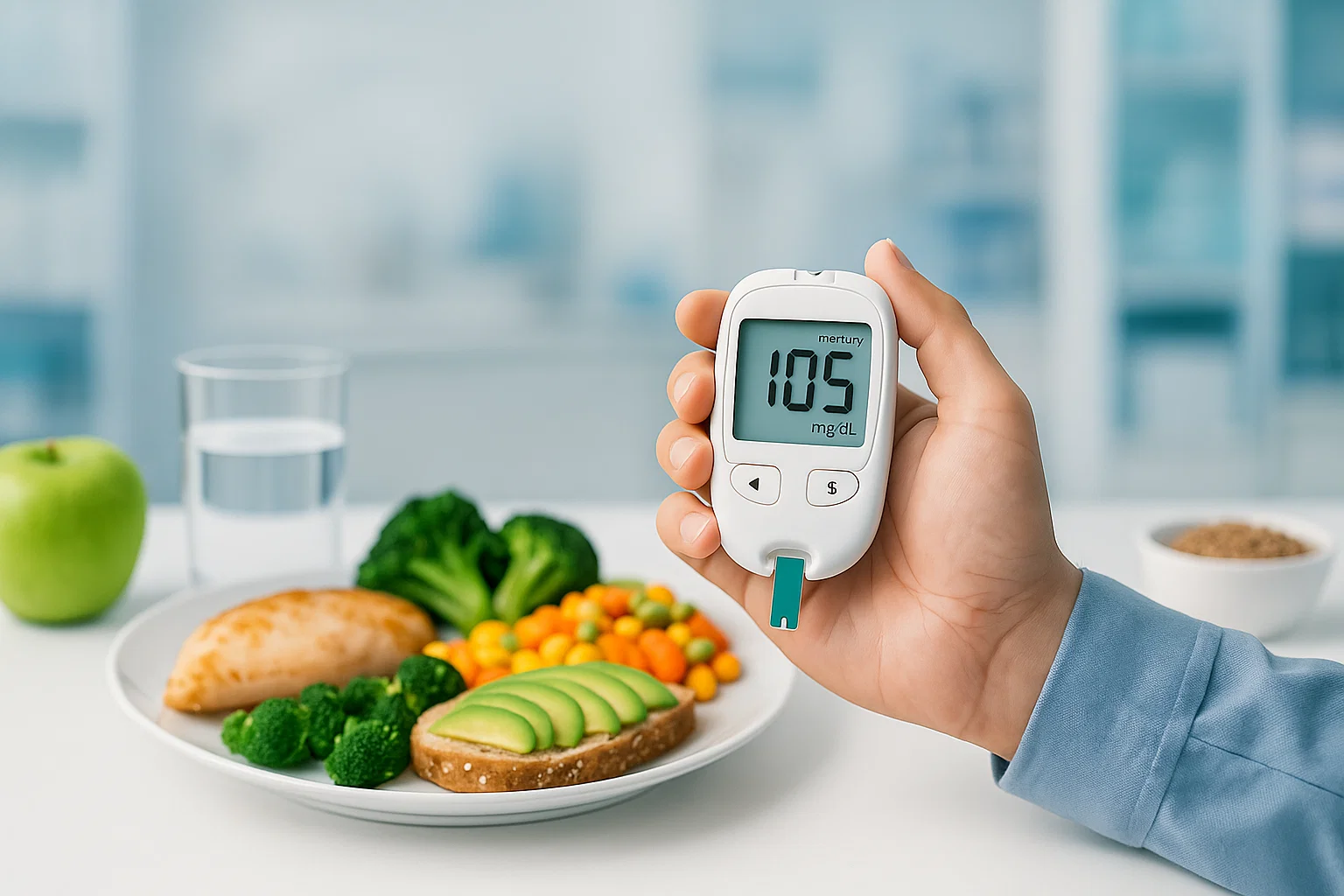
Diagnosis is straightforward. Your doctor will usually suggest a few blood tests that can be done at any standard lab. In some cases, additional tests like an insulin test may be recommended to understand insulin resistance or pancreatic function more clearly. Here's a quick look at the values we use.
| Test | Normal | Prediabetes | Diabetes |
|---|---|---|---|
| Fasting blood sugar (mg/dL) | Below 100 | 100 to 125 | 126 or above |
| Post-meal at 2 hours (mg/dL) | Below 140 | 140 to 199 | 200 or above |
| HbA1c (%) | Below 5.7 | 5.7 to 6.4 | 6.5 or above |
HbA1c shows your average sugar over the last three months. It's one of the most useful tests to track long-term control because it isn't affected by what you ate that morning.
At UniClinic, the goal of diabetes treatment is simple: keep your sugar in a safe range, prevent complications, and help you live a full, active life. Treatment rests on three main pillars.
Here's the good news. Type 2 diabetes can often be prevented, or at least delayed by many years. Even small changes make a real difference.
Please book an appointment if you have any of the common symptoms we spoke about, if you are over 35 and have not had a sugar test in the past year, if you have a family history of diabetes, or if you are pregnant and have not had a sugar screening. Early detection means easier control, fewer medicines, and a much lower chance of complications like heart disease, kidney damage, nerve problems, and vision loss.
Remember, diabetes is not a death sentence. Millions of Indians live long, productive, happy lives with it. The earlier you start, the better you do.
Disclaimer: UniClinic does not represent or warrant that the content or information provided through our blog is accurate, complete, or current, nor that our blog content will be uninterrupted or error-free. We do not guarantee that any defects in our blog content will be corrected, or that our or the server hosting them are free of viruses or other harmful components. UniClinic makes no warranties or representations regarding the use of materials in our blog content concerning their correctness, accuracy, adequacy, usefulness, timeliness, reliability, or otherwise, to the fullest extent permitted by applicable law. Information available via our Platform and blog content may reference products, programs, or services not available in your region. You understand and acknowledge that your sole and exclusive remedy for any defect in or dissatisfaction with our blog content is to cease using them.
6C, Hazra Road, Near Sujata Smriti Sadan, Bakul Bagan, Kalighat, Kolkata, West Bengal 700026
90540 08864
63563 55500
70690 05888
Mon - Sat : 8am - 8pm
Sunday : 8am - 5pm
Quick Links
Company
Resources
Follow Us

.jpg)

 Meaning, Causes, Symptoms, Treatment & Types.png)